Prank Newsletter: Funny Joke or Inbox Disaster Waiting to Happen?
Prank newsletters may seem harmless, but they can trigger spam, legal, and security issues. Learn the real risks before hitting send.

Prank Newsletter: Funny Joke or Inbox Disaster Waiting to Happen?
A prank newsletter—an email sent to amuse, surprise, or gently fool a recipient—can be either a harmless laugh or a fast track to complaints, blocks, and reputational damage. In the disposable email and privacy space, the line between “funny” and “harmful” is especially thin.
What Is a Prank Newsletter?
A prank newsletter is typically an email (or series of emails) designed to surprise or amuse the recipient. Common forms include:
- A spoof announcement or fake product update
- A joke “subscription” email sent once
- A mock internal company newsletter
- Mass newsletter sign-ups intended to flood an inbox
While some of these are genuinely harmless, others quickly cross into spam, harassment, or abuse, especially when automation or third-party tools are involved.
In practice, most people searching for “prank newsletter” fall into one of two groups:
- Someone looking to pull a prank
- Someone trying to stop a prank that’s already happening to them
This distinction is critical when evaluating tools, legality, and ethics.
Why Prank Newsletters Are More Common Now
Over the past few years, prank-style email campaigns have become more visible due to:
- Increased email marketing volume
- Popularity of April Fools–style campaigns
- Easy access to disposable email services
- Tools that automate newsletter signups in bulk
At the same time, inbox providers have become far more aggressive. Gmail, Outlook, and Yahoo now heavily weight:
- Spam complaints
- Sudden spikes in incoming newsletters
- User interaction with unsubscribe links
This has made prank newsletters riskier than they appear—especially for the sender.
Competitor Landscape: Tools Commonly Involved in Prank Newsletters
Below are real services frequently mentioned or used in the context of prank newsletters—either to enable them or to defend against them. These are also the same platforms users search for when dealing with inbox abuse.
1. TempMail
TempMail offers short-lived email addresses that expire automatically. Many users rely on it after being prank-signed up to newsletters, switching to disposable inboxes to protect their primary address.
2. Mailinator
Mailinator provides public disposable inboxes, widely used by developers and testers. Because inboxes are public, it’s not suitable for private pranks, but it’s often used to preview how newsletters look without exposing a real address.
3. 10MinuteMail
A classic disposable email service. Its popularity highlights how common unwanted newsletter signups have become—and how often users need instant inbox relief.
4. Guerrilla Mail
Guerrilla Mail supports replies and attachments, making it more flexible than most temporary email tools. It’s often used to test newsletter confirmation flows without exposing a real inbox.
5. YOPmail
YOPmail allows longer inbox retention, which is useful for users dealing with repeated prank newsletters over time. Many companies block YOPmail domains due to abuse.
6. Fake Mail Generator
This category of tools instantly generates inboxes and is commonly used to avoid newsletter spam entirely—often after users experience prank signups.
7. Maildrop
Maildrop is minimal and fast, designed specifically for avoiding spammy signups. It’s frequently recommended in privacy communities as a defensive tool.
8. MailBait
MailBait automatically signs an email address up for hundreds of newsletters. While sometimes framed as “testing,” it’s widely considered harassment and is a major reason people search for disposable email solutions.
9. Mailtrap
Mailtrap is a professional email testing platform. While not related to pranking directly, it represents the ethical alternative—testing emails safely without spamming real inboxes.
10. Disposable Domain Blocklists
Many websites now maintain internal lists of disposable email domains to prevent abuse. This trend reflects how prank newsletters have influenced signup security across the web.
When a Prank Newsletter Becomes a Problem
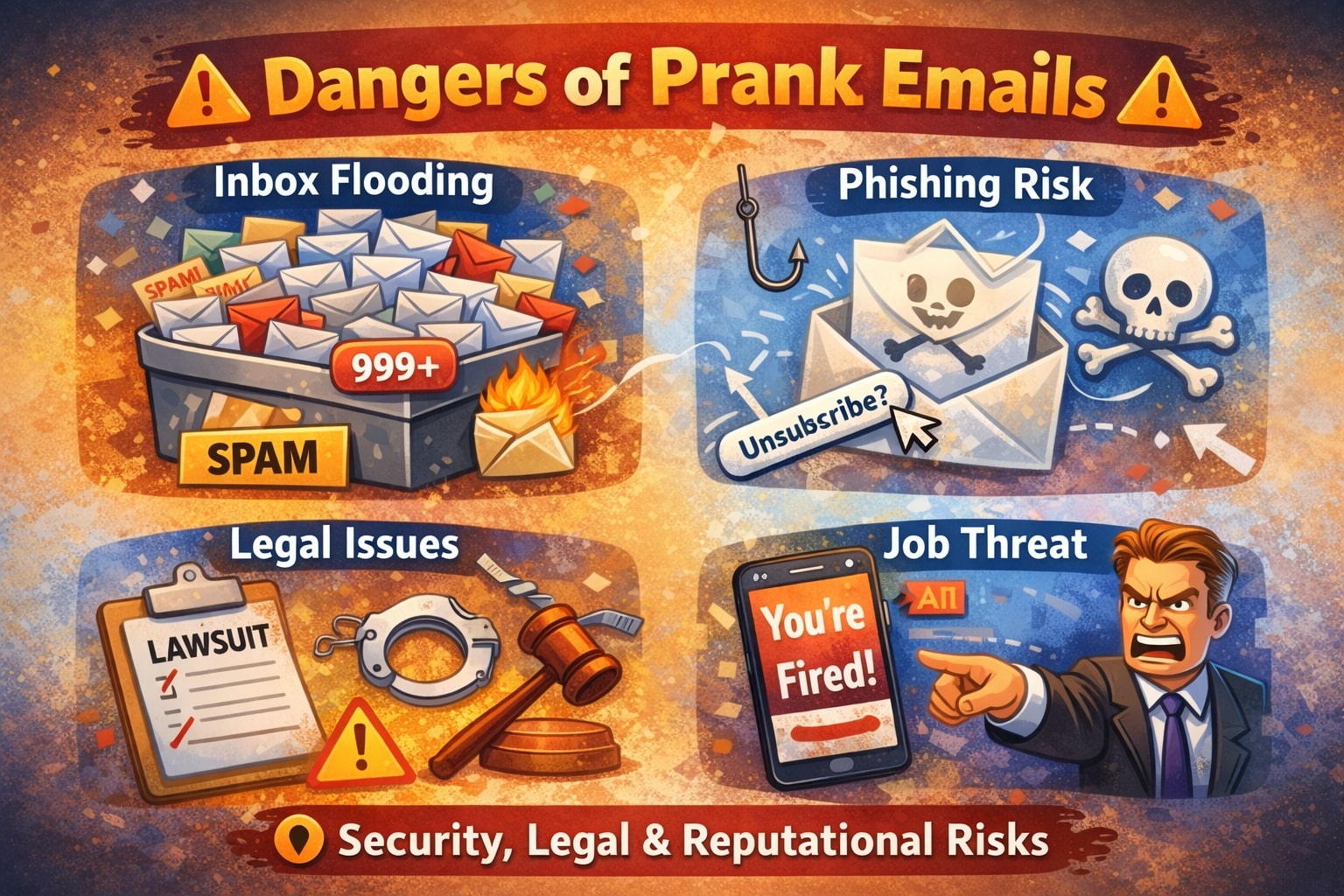
What starts as a joke can escalate quickly. Common real-world issues include:
- Inbox flooding that hides important emails
- Increased phishing risk from unfamiliar senders
- Stress or workplace consequences for the recipient
- Blacklisting of sender domains
- Legal exposure under anti-spam regulations
From a privacy standpoint, the recipient bears the cost, not the prankster.
Legal and Compliance Considerations
United States (CAN-SPAM)
- Deceptive subject lines are prohibited
- Opt-out must be honored
- Sender identity must be clear
Even a prank newsletter can violate these rules if it looks commercial or deceptive.
EU, UK, Canada (GDPR / CASL)
- Consent is required for marketing emails
- “It was a joke” is not a defense
- Fines can apply for misuse
For companies, even internal prank newsletters can create compliance issues if mishandled.
Why “Unsubscribe” Isn’t Always Safe
Many prank newsletters rely on the victim clicking unsubscribe links. This is risky because:
- Some unsubscribe links confirm the address is active
- Malicious links may redirect to phishing pages
- Clicking increases engagement signals
This is why disposable email services and aliases are now considered basic email hygiene.
Ethical Alternatives to Prank Newsletters
If humor is the goal, safer alternatives include:
- Opt-in joke newsletters
- Internal spoof emails with immediate disclosure
- Clearly labeled April Fools campaigns
- Fake announcements followed instantly by the reveal
The key principle: consent and clarity.
How Users Protect Themselves
From a disposable email service perspective, prank newsletters are one of the top reasons users adopt temporary inboxes. Common defenses include:
- Using disposable emails for all signups
- Email aliases and plus-addressing
- Filters and automatic deletes
- Abandoning compromised addresses
This behavior trend continues to grow year over year.
FAQ: People Also Ask
Is sending a prank newsletter illegal?
It depends on jurisdiction. In many regions, sending unsolicited emails—even as a prank—can violate anti-spam laws.
Can prank newsletters damage sender reputation?
Yes. Spam complaints and unusual traffic patterns can permanently harm deliverability.
How do people stop prank newsletter spam?
Disposable email services, filters, and aliasing are the most effective methods.
Are inbox-flooding tools considered harassment?
In many cases, yes—especially when used without consent.
Are disposable email services used because of prank newsletters?
Absolutely. Unwanted subscriptions are one of the most common reasons users adopt temporary email addresses.
Final Thoughts
The popularity of the prank newsletter reveals a deeper truth: email is still powerful—and still easy to abuse.
For pranksters, the risks are higher than they appear. For recipients, disposable email services are no longer optional—they’re essential privacy tools. And for companies operating in this space, educating users about safe email practices builds far more trust than promoting “harmless fun.”
Handled responsibly, humor can build engagement. Handled poorly, it pushes users straight toward temporary inboxes—and away from your brand.
Explore More Articles
Discover more insights about privacy, security, and digital communication.
View All Articles© 2026 Tempmail.world. All rights reserved.